
Bhaktapur Durbar Square is the old royal square of Bhaktapur city, 13 km east of Kathmandu, and the best-preserved of the three Kathmandu Valley Durbar Squares. Foreigners pay NPR 1,800 (about US$18) to enter; the ticket covers the whole walled old city, not just the square itself.
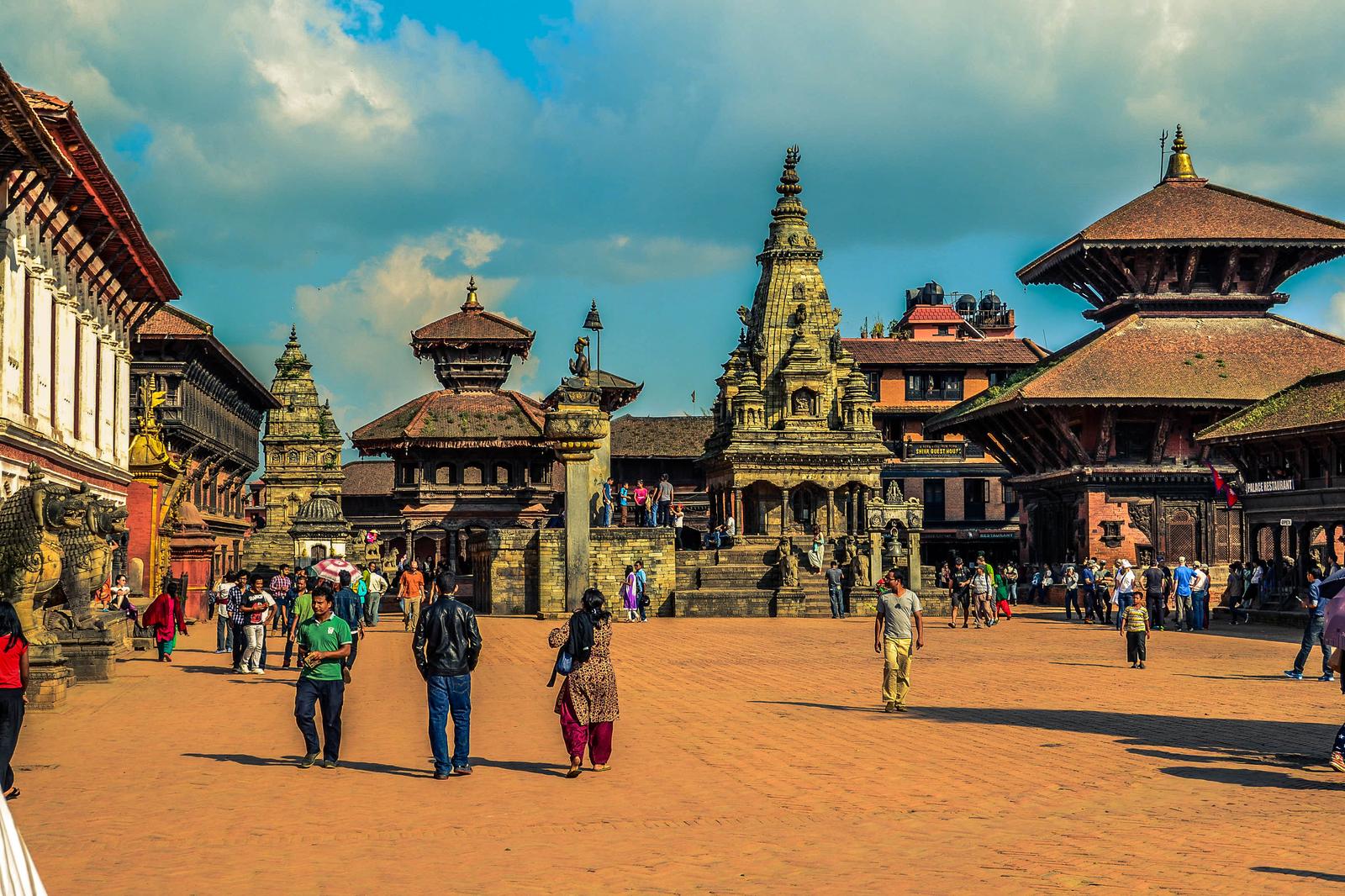
Bhaktapur Durbar Square is the old royal square of Bhaktapur city, 13 km east of Kathmandu, and the best-preserved of the three Kathmandu Valley Durbar Squares. Foreigners pay NPR 1,800 (about US$18) to enter; the ticket covers the whole walled old city, not just the square itself.
If you have one day in the Kathmandu Valley and want real Newari architecture without the crowds of Kathmandu's own Durbar Square, Bhaktapur is the one to pick.
What is Bhaktapur Durbar Square?
Bhaktapur was an independent Malla kingdom until the late 18th century, and its Durbar Square was the seat of that kingdom's kings. Unlike Kathmandu's Durbar Square, which sits in the middle of a busy modern city, Bhaktapur's old town around the square is still mostly car-free, brick-paved, and lived-in. Potters work in open courtyards, farmers dry grain on rooftops, and the temples are used for daily worship, not just photographs.
The square and the old city around it form a UNESCO World Heritage Site, listed together with Kathmandu and Patan Durbar Squares as part of the Kathmandu Valley inscription.
Where is it and how do you get there from Kathmandu?
Bhaktapur is about 13 km east of central Kathmandu, roughly 45–75 minutes by road depending on traffic on the Araniko Highway.
- Taxi from Thamel or Kathmandu airport: 30–45 minutes, around NPR 1,000–1,500 one way (negotiate or ask for the meter).
- Local bus or microbus: from Ratna Park or Bagh Bazar, fare under NPR 100; get off near Kamal Binayak or the bus park and walk 10–15 minutes to the ticket gate.
- Private car or tour: most Kathmandu-based operators, including HSJ, run it as a half-day or full-day private tour that also covers Changu Narayan temple on the way.
If you're also heading towards Nagarkot or Dhulikhel, Bhaktapur sits right on that route, so it's easy to combine into one day rather than a separate trip into the valley.
Bhaktapur Durbar Square entry fee (2026)
The fee is a single ticket for the whole historic town, not per monument.
| Visitor type | Entry fee |
|---|---|
| Foreign nationals (non-SAARC) | NPR 1,800 (~US$18) |
| SAARC nationals (India, Bangladesh, Sri Lanka, etc.) | NPR 500 |
| Chinese nationals | NPR 500–1,000 (rate varies by source; confirm at the gate) |
| Nepali citizens | Free |
| Children under 10 | Free |
A few practical points:
- The ticket is checked once, at the main western gate near the bus park. Once inside, you can walk freely between Durbar Square, Taumadhi Square, Dattatreya Square and Pottery Square without paying again.
- Pay in Nepali rupees cash if you can; some booths accept US dollars but give change in NPR.
- If you're staying in the Kathmandu Valley longer, ask at the ticket counter about a free one-week extension with your passport, so you can return without buying a second ticket.
- Entry to separate museums inside the complex, such as the National Art Gallery in the old palace, usually costs extra on top of the city ticket.
Because fees and extension rules change from time to time, check the current rate at the gate or with the Nepal Tourism Board before you go.
Opening hours and best time of day to visit
The old town itself is open all day since people live and work there, but the ticket counters generally operate from around 9 AM to 6 PM. Outside those hours you can usually still walk through, though you may be asked for a ticket if challenged later.
For photos and a calmer visit, go early morning (soon after the gates open) or late afternoon. Midday sun is harsh on the open brick squares, and tour buses tend to arrive between 10 AM and 1 PM.
What to see inside Bhaktapur Durbar Square
The ticket covers four connected squares. Here's what's worth your time in each:
Durbar Square itself
- 55-Window Palace – the former royal palace, named for the carved wooden windows along its upper floor.
- Golden Gate (Lu Dhwakha) – the gilded main entrance to the palace courtyard, considered one of the finest pieces of metalwork in the valley.
- Vatsala Durga Temple site – the stone temple here was destroyed in the 2015 earthquake; its bell and plinth remain.
- Nyatapola Temple – actually a short walk away in Taumadhi Square (see below), but visible from parts of Durbar Square.
Taumadhi Square
- Nyatapola Temple – a five-tiered pagoda built in the early 18th century under King Bhupatindra Malla, the tallest pagoda-style temple in Nepal. It survived both the 1934 and 2015 earthquakes with only minor damage.
- Bhairabnath Temple – dedicated to a fierce form of Shiva, central to the Bisket Jatra festival.
Dattatreya Square
- Dattatreya Temple – said to be built from the timber of a single tree.
- Peacock Window – an intricately carved wooden window on a nearby monastery building, one of the most photographed details in Bhaktapur.
Pottery Square (Bolachhen)
- Rows of potters working at foot-powered wheels and drying unfired clay pots in the open. Good spot to buy a small souvenir directly from the maker.
How many hours do you need?
For a reasonable pace, budget 3 to 4 hours to see all four squares without rushing, plus time to sit at a rooftop café overlooking the temples, which is one of the better ways to take in the square. If you also want to add Changu Narayan temple, a hilltop Vishnu temple about 30–40 minutes further on, plan a full day.
HSJ runs this exact combination as a private day trip: a morning in Bhaktapur Durbar Square, a visit to Changu Narayan, then a transfer onward (our version continues to Kathmandu University in Dhulikhel, but the same route works as a simple round trip back to Kathmandu). See the Bhaktapur Durbar Square day tour for the exact plan.
Best time of year to visit
Bhaktapur can be visited year-round, but conditions change by season:
- October to December: clear skies, mild days, the best general window for sightseeing.
- January to February: cold mornings (can drop near freezing), clear air, fewer crowds.
- March to April: warm, good light, and the chance to catch Bisket Jatra, Bhaktapur's own new year festival with chariot pulling and a tower-raising ceremony in Taumadhi Square, usually in mid-April.
- May to June: hot and increasingly humid before the monsoon.
- July to September: monsoon rain, often in short afternoon bursts; the brick squares can get slippery, but the crowds thin out.
If your trip dates are flexible, pairing a Kathmandu Valley sightseeing day with a trek is a common pattern among HSJ's own travellers — many combine a day in Bhaktapur with an Everest Base Camp trek or an Annapurna Base Camp trek at either end of the trip.
A short history: earthquakes and rebuilding
Bhaktapur has been hit hard by earthquakes twice in living memory. The 1934 earthquake damaged large parts of the square, and the April 2015 earthquake caused further serious damage, including the collapse of the Vatsala Durga temple and parts of the 55-Window Palace complex. Reconstruction has used traditional brick and timber techniques where possible, with support from Nepal's Department of Archaeology and international conservation partners. Some structures are still under repair, so expect scaffolding around a few monuments even now.
Despite the damage, most of the square's major landmarks, including Nyatapola Temple and the Golden Gate, are standing and open to visitors.
How to visit: solo, guide, or day tour
You can absolutely walk around Bhaktapur on your own with a map and the ticket in hand; signage at major monuments is decent. A local guide adds context that signage can't: who built what, why certain temples face a certain direction, and which courtyards are still private homes versus open to visitors.
If you'd rather not manage transport, timing, and a guide yourself, HSJ offers Bhaktapur as a private day trip, combinable with Changu Narayan and other valley stops. It also fits well inside a longer Kathmandu Valley itinerary — see our World Heritage Sites Tour and 7 UNESCO Heritage Sites day tour if you want to see Bhaktapur alongside Kathmandu and Patan Durbar Squares, Swayambhunath, Boudhanath, and Pashupatinath. For a full list of short trips around the capital, browse our day trips from Kathmandu.
Frequently asked questions
What is the entry fee for Bhaktapur Durbar Square?
NPR 1,800 (about US$18) for foreign nationals, NPR 500 for SAARC nationals, and free for Nepali citizens and children under 10. The ticket covers the entire old town, not a single monument.
How far is Bhaktapur from Kathmandu?
About 13 km, roughly 45–75 minutes by road depending on traffic on the Araniko Highway.
How many hours do I need at Bhaktapur Durbar Square?
Plan on 3 to 4 hours to see all four squares comfortably. Add another 2–3 hours if you want to combine it with Changu Narayan temple on the same day.
Is Bhaktapur Durbar Square worth visiting after the earthquake damage?
Yes. Major landmarks including Nyatapola Temple, the Golden Gate, and most of the 55-Window Palace survived or have been restored. A few structures remain under repair.
What is the best time of year to visit?
October to April generally gives the clearest skies and driest conditions. Mid-April is worth planning around if you want to see the Bisket Jatra festival in Taumadhi Square.
Can I visit Bhaktapur on the same day as Kathmandu Durbar Square and Patan?
It's tight but possible with a private vehicle and an early start, since all three are within about an hour of each other. Most visitors find one square per day, paired with a nearby temple, is a more relaxed pace.
Frequently asked questions
What is the entry fee for Bhaktapur Durbar Square?
NPR 1,800 (about US$18) for foreign nationals, NPR 500 for SAARC nationals, and free for Nepali citizens and children under 10. One ticket covers the whole old town, including Durbar Square, Taumadhi Square, Dattatreya Square and Pottery Square.
How far is Bhaktapur from Kathmandu?
About 13 km east of central Kathmandu, which is roughly 45 to 75 minutes by road depending on traffic on the Araniko Highway.
How many hours do I need at Bhaktapur Durbar Square?
Plan on 3 to 4 hours to see all four squares without rushing. Add 2 to 3 more hours if you combine it with a visit to Changu Narayan temple on the same day.
Is Bhaktapur Durbar Square worth visiting after the 2015 earthquake damage?
Yes. Major landmarks such as Nyatapola Temple, the Golden Gate and most of the 55-Window Palace have survived or been restored, though a few structures are still under repair.
What is the best time of year to visit?
October to April gives the clearest skies and driest conditions. Mid-April is worth planning around for the Bisket Jatra festival in Taumadhi Square.
Can I visit Bhaktapur, Kathmandu Durbar Square and Patan all in one day?
It's possible with a private vehicle and an early start since all three sit within about an hour of each other, but most visitors find one square per day, paired with a nearby site, more comfortable.