Upper Dolpo to Upper Mustang Trek
A 32-day Dolpo to Mustang trek across two of Nepal's most remote regions. Walk past Phoksundo Lake to Shey Gompa under the Crystal Mountain, through the villages of Upper Dolpo, and over the 5,705 m Ghami La to the walled city of Lo Manthang.
Trip Highlights
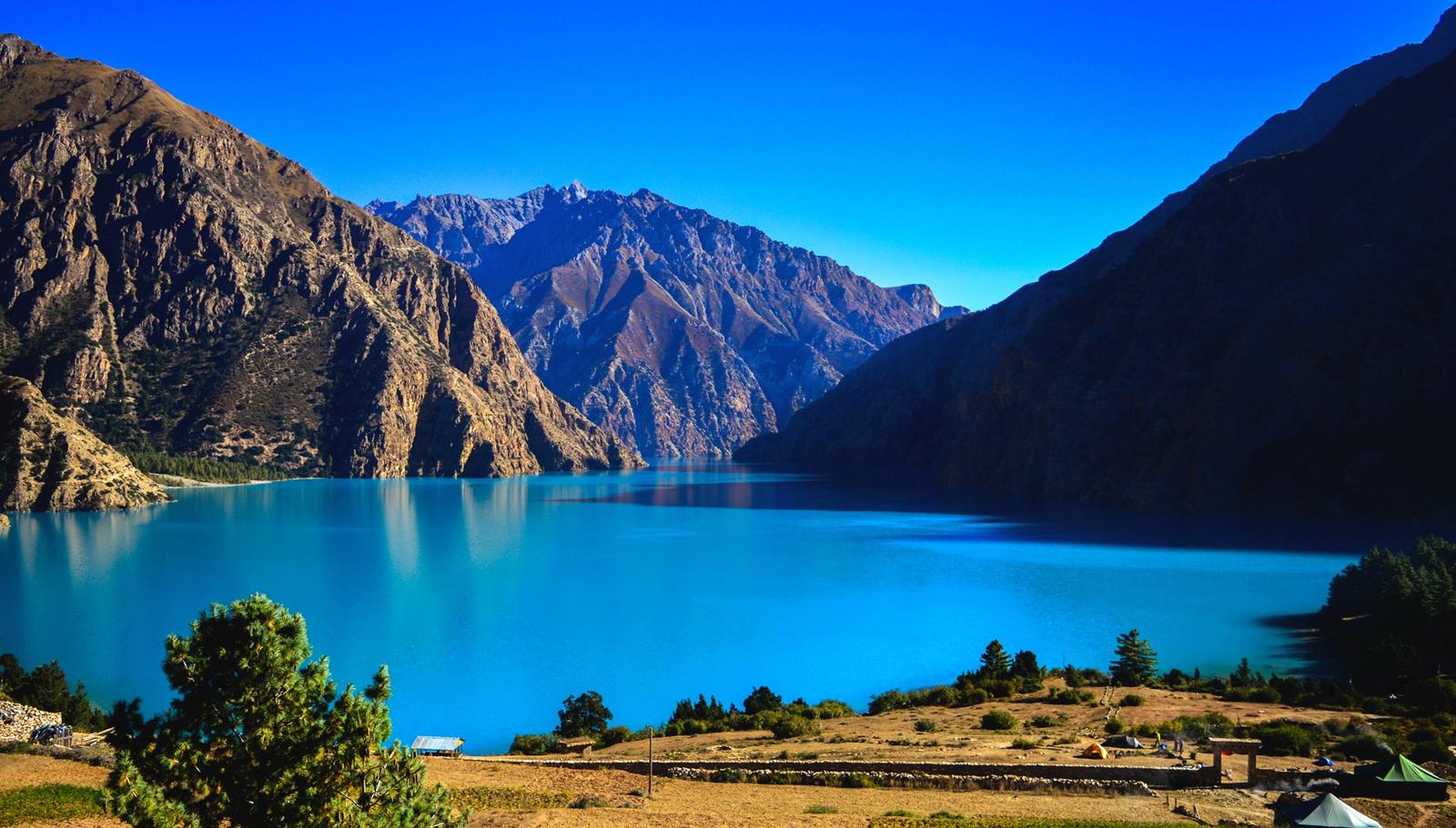
- Phoksundo Lake, the deepest lake in Nepal, and the 200 m waterfall below it
- The lake-rim trail from the film Himalaya
- Shey Gompa and the Crystal Mountain, the spiritual heart of Dolpo
- Four passes above 5,000 m, topped by the Ghami La at 5,705 m
- Saldang, Tinje and Chharka, Tibetan villages far from any road
- Bon and Buddhist monasteries that see few outside visitors
- The red cliffs of Dhakmar and Ghar Gompa in Upper Mustang
- Lo Manthang, the walled capital of the old kingdom of Lo
- Two rain shadow regions, dry enough to trek in summer
Trip Overview
Day-by-Day Itinerary
Welcome to Nepal. Our team meets you at Tribhuvan International Airport and drives you to the hotel in Thamel. Take some rest after the long flight.
At 5 PM we meet at the hotel for a short orientation. Your guide will go through the trip plan with you and check your passport and visa details, because we need them for the restricted area permits. After that we go together for a welcome dinner.
Overnight at the hotel in Kathmandu.
Today our office goes to the Immigration Department for your Upper Dolpo and Upper Mustang restricted area permits. For this we need your original passport in the morning. You will get it back in the evening.
In the afternoon your guide comes to the hotel to check your gear. This is a long camping trek, so warm clothes, a good sleeping bag and strong boots are very important. If something is missing, Thamel has many shops where you can buy or rent it.
The rest of the day is free. You can visit Boudhanath or Swayambhunath, or just relax. Overnight at the hotel in Kathmandu.
After breakfast we drive to the domestic airport for the flight to Nepalgunj. The flight takes about one hour. Nepalgunj is in the Terai plains, close to the Indian border, and it is much hotter than Kathmandu.
There are no direct flights to Juphal from Kathmandu, so we stay one night here. In the afternoon you can walk around the local bazaar. It feels more like India than the mountains we are going to.
Overnight at the hotel in Nepalgunj.
We take an early morning flight to Juphal (2,475 m). It is a small plane and the flight is short but beautiful, with mountains on both sides. Mountain flights are always in the morning because the weather is better.
At Juphal you meet our trekking crew: cook, kitchen team and porters. After a cup of tea we start walking. The trail goes down through terraced fields and small villages to the Thuli Bheri river. We pass Roop Ghar with its old water mill and follow the river to Dunai, the main town of Dolpa district.
It is an easy first day. Overnight at camp in Dunai.
Today we leave the Bheri river and turn north into the valley of the Suli Gad river. At the entrance of Shey Phoksundo National Park the rangers check our permits.
The trail goes up and down a lot, through small villages with walnut trees and fields of corn and buckwheat. Take it slow and drink plenty of water, this is still the warm part of the trek.
We reach Chhepka in the afternoon, a small place with a few houses by the river. Overnight at camp in Chhepka.
The valley becomes a narrow gorge today. We cross the river a few times on suspension bridges and walk through forest of blue pine, cedar and birch. Keep your eyes on the cliffs, sometimes we can see blue sheep.
Some parts of the trail are cut into the rock and can be slippery, so walk carefully and follow your guide. After the junction of the Phoksundo and Pungmo rivers we climb to Renje.
Tonight we sleep above 3,000 m for the first time. Overnight at camp near Renje.
Today is one of the most beautiful days of the trek. We climb on a dusty trail to a ridge at about 3,780 m. From here you see the waterfall coming out of Phoksundo Lake. It is about 200 m high, one of the highest in Nepal.
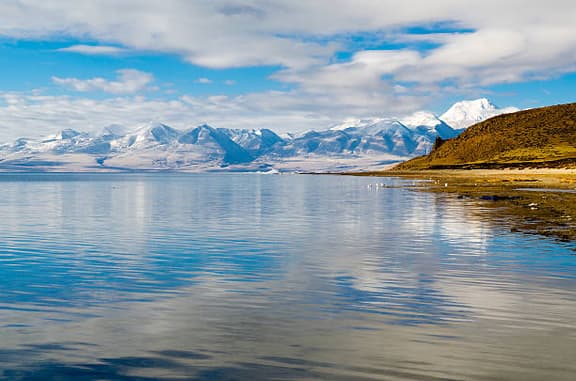
After the ridge we walk down through birch forest to Ringmo village. Ringmo has stone houses with flat roofs, chortens and long mani walls. Just past the village the lake comes into view, deep blue and green, with big mountains all around.
We camp near the lake shore. Overnight at camp at Phoksundo Lake.
Today we rest. This day is important to help your body get used to the altitude before we go higher.
In the morning you can walk along the lake to Tshowa Gompa, an old Bon monastery by the lake. Bon is the old religion of Tibet, older than Buddhism, and Dolpo is one of the few places where it is still alive. You can also visit Ringmo village and see the local life.
Phoksundo is the deepest lake in Nepal, and its colour changes during the day. Sit by the water, read a book, wash your clothes. Overnight at camp at Phoksundo Lake.
Today we walk the famous trail on the west side of the lake. It is cut into the cliff high above the water. You may have seen it in the film Himalaya. Some parts are narrow, so we go slowly and stay together.
The trail climbs to a ridge at about 4,000 m with a great view of the whole lake and the snow peaks behind it. Then we go down through juniper and birch to the flat meadow at the north end of the lake.
We camp at Chunemba, a quiet place by the river. Overnight at camp in Chunemba.
We follow the Phoksundo Khola upstream through a wide valley. Later the valley turns and gets narrow, with high rock walls on both sides. The last part is a steep climb to our camp below the Kang La.
This place is called Snowfield Camp. The writer Peter Matthiessen gave it this name in his book The Snow Leopard. It is cold here and the air is thin, so walk slowly and keep warm.
We have an early dinner and an early night, because tomorrow we cross our first big pass. Overnight at Snowfield camp.
We start very early in the morning. The climb to the Kang La is steep, on loose scree, and it takes two to three hours. Go slowly, take small steps and breathe. At the top there are prayer flags and a wide view of the mountains of inner Dolpo.
From the pass the trail goes down steeply at first, then more gently into a long valley. We follow the river down to Shey Gompa. A red chorten marks the way into Shey.
Shey is the spiritual heart of Dolpo, under the Crystal Mountain. Overnight at camp at Shey Gompa.
Another rest day to help acclimatization. Shey Gompa is one of the oldest monasteries in Dolpo, and the monk will open it for us if he is there.
In the morning we can walk up to Tsakang Gompa, which sits on the red cliffs above Shey. The Crystal Mountain, Riu Drukta, is sacred to the people of Dolpo, and each year pilgrims walk around it. Your guide will tell you the stories.
In the afternoon rest, wash and dry your clothes. Overnight at camp at Shey Gompa.
Today we cross our second high pass. The trail climbs slowly up a narrow valley to the Sela La at 5,010 m. From the top you can look east towards Mustang and north towards Tibet.
Then we walk down through open pastures. In this area we may see nomad families with their black yak hair tents and herds of yaks and sheep.
We camp at Namgung, where a small red monastery sits under a big cliff. Visit the gompa before dinner. Overnight at camp at Namgung Gompa.
A short and easy day. We walk on a high trail over the hills with nice views of the dry mountains of Upper Dolpo. After a ridge with prayer flags we see Saldang below us.
Saldang is one of the biggest villages in Upper Dolpo, spread along a terrace above the Nagon Khola. Parts of the film Himalaya were shot here.
We reach camp before lunch. In the afternoon walk around the village, see how people live and farm at this altitude, and maybe have a cup of salt butter tea with a local family. Overnight at camp in Saldang.
From Saldang we go down to cross the Nagon Khola, then climb on a rocky trail. It is a long, steady climb to the Khoma La at 4,565 m.
From the pass the trail goes down slowly to Khoma, a beautiful village with white houses, a gompa and long mani walls. People here live a very traditional life, close to Tibet in culture.
Overnight at camp in Khoma.
We cross a small river and climb to the Shimen La at 4,375 m. From the top there is a view down into the Panzang valley, where we will walk for the next days.
We go down to Shimen village. In autumn the villagers are busy with the harvest, and you can see them threshing barley on the flat roofs. There is a gompa in the middle of the village worth a visit.
Overnight at camp in Shimen.
An easy day up the Panzang valley. We pass long mani walls, old chortens and Pu Gompa on the other side of the river. Some trails here lead north to the Tibet border, and the people of Dolpo still use them for trade.
Tinje is a big village in a wide valley. Many people from Tinje acted in the film Himalaya. The well-known Dolpo painter Tenzin Norbu is also from here.
We arrive early, so there is time to rest. Overnight at camp in Tinje.
We walk along the old trading trail. On the way we may meet people from Chharka with their yak caravans going to or from Tibet.
First the trail is easy along the Panzang river. Later the valley becomes narrow with windy canyons, and the trail goes up and down. After a few hours the valley opens again and we climb to the high flat land of Rapka.
Rapka is a herders' camp with a big open view. It is cold at night here. Overnight at camp in Rapka.
A long day, so we start early. First we go down to a wide but shallow river and then cross several small streams. Then the climb to the Chharka La begins. There are two tops on this pass, and the first one is not the real one, so don't stop too early.
The pass is about 5,000 m. From the top we see Dhaulagiri for the first time, and it stays with us for the next days.
Then we walk down a long way to Chharka Bhot, an old village with narrow lanes, stone houses and a gompa. Overnight at camp in Chharka.
We keep this day free in case of bad weather or delays earlier in the trek, for example if the flight to Juphal was late.
If we don't need it, it is a rest day before the hardest part of the trek. Visit the gompa above the village, walk through the fields, and get ready for the high pass. Your guide will check everyone's health today.
Overnight at camp in Chharka.
Today we leave the last village in Dolpo. From here until Ghami in Mustang, about five days, there are no villages, only our camps.
We walk up the valley through high pastures where yaks graze in summer. Later the trail goes over moraine, with rocks left by old glaciers.
We camp by the Nakhkem Khola. Overnight at camp at Nakhkem Khola.
A shorter day, because we need to gain height slowly. The trail crosses small streams and moraine fields and climbs steadily.
We stop at the high camp below the pass, at about 5,360 m. This is the highest camp of the trek. It will be very cold tonight, so keep your down jacket, hat and gloves close and drink a lot of hot water.
If anyone feels sick from the altitude, tell your guide. Overnight at high camp.
The big day. We start before sunrise and climb slowly to the Ghami La at 5,705 m, the highest point of the trek and the border between Dolpo and Mustang.
From the top the view is huge: Dhaulagiri, the Annapurna range and the brown and red hills of Upper Mustang. Take your photos, but don't stay too long at this altitude.
Then we go down to our camp at Kharka, still high at about 5,380 m. Overnight at camp at Kharka.
A gentle day downhill. We walk over moraine and alpine slopes and follow small streams towards the Ghami valley.
Going down feels good after the high camps. You will sleep better tonight.
This is our last night in tents. In the evening our crew usually cooks something special. Overnight at camp above Ghami.
We walk down through canyons and cross the Ghami river a few times. Slowly the first fields and trees appear, and then Ghami village.
Ghami is one of the bigger villages in Upper Mustang, with white houses and one of the longest mani walls in Nepal. After three weeks of camping, tonight we sleep in a lodge, and if there is sun, you can have a hot shower.
Overnight at a lodge in Ghami.
This is one of the most beautiful days in Mustang. We walk under the red cliffs of Dhakmar. The local story says the red colour is the blood of a demon killed by Guru Rinpoche.
Then we climb over a pass of about 4,000 m to Ghar Gompa, also called Lo Gekar. It is one of the oldest monasteries in Mustang, with old paintings and many carved stones.
From there we walk on to Tsarang, with its big white monastery and an old palace. Overnight at a lodge in Tsarang.
A short day across a wide plateau. From the last small pass you see Lo Manthang for the first time, a walled town sitting in a flat valley.
Lo Manthang was the capital of the old Kingdom of Lo. People still live inside the walls, in houses that are hundreds of years old. The last king of Mustang lived here until the monarchy ended.
We reach the town in time for lunch. In the afternoon walk around the lanes inside the walls. Overnight at a lodge in Lo Manthang.
A full day to see Lo Manthang. We visit Jampa and Thubchen monasteries, which have some of the finest old wall paintings in Nepal. We can also see the outside of the old royal palace and the monastery school.
In the afternoon we go north by jeep or on horseback to Chhoser, where there are caves cut high into the cliffs. Some, like Jhong cave, have many rooms on different floors. Nobody knows exactly who made them or why.
Overnight at a lodge in Lo Manthang.
Today we leave Upper Mustang by jeep. The road is rough and dusty and follows the Kali Gandaki valley down past Tsarang, Ghami and Kagbeni.
At Kagbeni we leave the restricted area. In the afternoon we reach Jomsom, the main town of Mustang, with shops, hotels and a busy airstrip.
In the evening we have a farewell party with our trekking crew. This is a good time to say thank you to them. Overnight at the hotel in Jomsom.
A long drive down the Kali Gandaki, one of the deepest gorges in the world, between Dhaulagiri and the Annapurnas. We pass Marpha, Tatopani and Beni. Some parts of the road are rough, so it is a long and bumpy day.
In the evening we reach Pokhara, by Phewa Lake. After a month in the mountains, a walk by the lake and a good dinner feel very nice.
Overnight at the hotel in Pokhara.
We drive back to Kathmandu along the Prithvi Highway, following the Trishuli river. On the way we stop for lunch at a roadside restaurant.
In the evening we meet for a farewell dinner with Nepali food and talk about the trek.
Overnight at the hotel in Kathmandu.
Today the trip ends. Our team takes you to the airport about three hours before your flight.
If you want to stay longer, we can arrange more days in Kathmandu, a tour of the old cities of Bhaktapur and Patan, or a jungle safari in Chitwan.
Thank you for trekking with Himalayan Social Journey. We hope to see you again in the mountains.
Lodges are indicative and may change with availability on the trail.
Route & altitude
32 days
What’s Included
Frequently Asked Questions
It is one of the hardest treks in Nepal. You walk for 24 days, most nights are above 3,500 m, and you cross four passes above 5,000 m, the highest being the Ghami La at 5,705 m. Days are 4 to 8 hours on rough trails, and most nights are in tents in the cold. We grade it 5 of 5, Extreme.
Yes. You should have done at least one multi-day trek above 4,000 m, such as Everest Base Camp, the Annapurna Circuit or Manaslu, and know how your body handles altitude. Camping experience helps. No climbing skills are needed, but you must be steady on steep scree and narrow trails.
The highest point is the Ghami La at 5,705 m on day 23, and the highest camp is about 5,380 m. By then you have spent three weeks gaining height slowly. We plan rest days at Phoksundo Lake and Shey Gompa and a spare day at Chharka. Your guide checks everyone every day. If someone shows signs of altitude sickness, they go down, and the plan changes.
You need restricted area permits for Upper Dolpo and Upper Mustang, a Shey Phoksundo National Park permit and an Annapurna Conservation Area permit. All four are included in the price, and our office arranges them in Kathmandu on day 2. We need a copy of your passport and visa in advance, and your original passport on day 2.
Not on your own. Both restricted areas need at least two trekkers, a licensed guide and a booking through a registered agency. If you are travelling alone, tell us when you enquire and we will try to match you with another trekker on the same dates.
You camp for 20 nights in Dolpo and on the high pass, in two-person tents with foam mattresses. There is a dining tent and a toilet tent. In Upper Mustang you sleep in village lodges for four nights. In Kathmandu, Nepalgunj, Jomsom and Pokhara you stay in hotels.
Our cook prepares three hot meals a day: porridge, eggs and bread for breakfast, and rice, noodles, pasta, potatoes, dal and vegetables for lunch and dinner, with tea and coffee. Fresh food runs low later in the trek, but there is always enough. Tell us about any dietary needs when you book.
The crew boils water for you every morning and evening. Bring a water filter or purification tablets for refills from streams during the day. There are no shops selling bottled water for most of the route.
May to October. Dolpo and Upper Mustang are in the rain shadow of the Himalaya, so they get much less monsoon rain than the rest of Nepal and can be trekked in summer. September to mid-October is usually the clearest. The high passes can have snow in May and from late October, and the route is closed in winter.
Flights to Juphal are small planes and are often delayed by weather. We build a spare day into the trek at Chharka, which can absorb a delay at the start. If the delay is longer, we shorten a rest day or adjust the plan with you. Hotel nights caused by delays are not included.
The road from Lo Manthang to Jomsom, Pokhara and Kathmandu is now open, and it avoids the Jomsom flights, which are often cancelled by wind and cloud. The drives are long and some sections are rough. In the monsoon, June to September, landslides can close the road between Jomsom and Beni for a day or more, so for summer trips we suggest you leave a free day before your flight home.
There is no electricity in Dolpo. Bring power banks and a small solar panel if you need to keep devices charged. In the Mustang lodges you can usually charge for a small fee.
For most of Upper Dolpo there is no signal at all. Expect two to three weeks without contact, and tell your family before you go. Some villages in Upper Mustang have phone signal or paid wifi.
Your travel insurance must cover trekking up to 6,000 m and emergency helicopter evacuation. A helicopter rescue from Dolpo can cost several thousand US dollars. We need your policy details before the trek starts.
Porters or pack animals carry your main bag. Keep it to about 15 kg. You carry a day pack with water, warm layers, a rain jacket, snacks and your camera, because you will not see your main bag until camp.
Start training at least three months ahead. Walk long days on hills with a loaded pack, add stair climbing and cardio, and do two or three days of hiking in a row. A medical check before you travel is a good idea, especially for heart and lung conditions.
Yes. We run it privately for two or more people on dates that suit you, between May and October. We can also add extra days, for example a longer stay in Lo Manthang or a walk out of Mustang instead of the drive.
Traveler Stories
Traveler Reviews
Really excellent day! Rajan was my tour guide and he was excellent. Explained every historical site and the background behind it and was very informative the whole day. He made sure I was ok always, gave good reccomendations for delicious food and we got to sp…
We really enjoyed our tour of the 7 UNESCO sites today. Dipendra was very informative and told us all about the history and fascinating facts of the many temples we visited. This is a full day trip and I would recommend it to anyone visiting Kathmandu.
A great way to see all of the important sites in Kathmandu in just one day! The guide, Dipendra was great! Informative and funny!
Dioendra our guide was terrific!!! Professional, punctual, very knowledgeable We visit 7 UNESCO sites and spend several hours knowing the fascinating and magical Nepalese culture…. Wonderful time !!! Highly recommended this tour with Dioendra!!
Compare Similar Experiences