
7 Days Bhutan Tour - Thimphu, Punakha, Phobjikha & Tiger's Nest
This 7-day Bhutan tour adds the Phobjikha valley to the classic western circuit. You cross the Dochula Pass to Punakha, climb over the Pele La to Gangtey and the black-necked crane valley, then return to Paro for the Tiger's Nest hike — travelling by private vehicle with a licensed Bhutanese guide throughout.
Trip Highlights
- Hike to Tiger's Nest Monastery (Paro Taktsang), clinging to a cliff face some 900m above the Paro valley — the image that defines Bhutan.
- Look out over the Phobjikha valley from Gangtey Goenpa, founded in 1613 above a glacial bowl that has never been forested.
- Watch for black-necked cranes wintering on the Phobjikha marsh between late October and mid-February.
- Cross the Pele La Pass at 3,420m, the old dividing line between western and central Bhutan.
- Cross the Dochula Pass, where 108 Druk Wangyal Chortens stand against the eastern Himalaya on a clear morning.
- Stand at Punakha Dzong, built in 1637 at the meeting of the Pho Chhu and Mo Chhu rivers.
- Walk out to Chimi Lhakhang, the 15th-century fertility temple of the Divine Madman, through rice fields and a village painted accordingly.
- Stand beneath the Buddha Dordenma, a 51.5-metre gilded bronze Buddha seated above Thimphu.
Trip Overview
Day-by-Day Itinerary
Your flight into Paro drops between forested ridges onto one of the most talked-about airstrips in the Himalayas, and our representative meets you the moment you clear customs. From there it's a scenic hour or so up the valley to Thimphu (2,334m), Bhutan's capital and, at a few hundred thousand people, a capital that still feels like a market town.
You'll begin at the Memorial Chorten, the white stupa built in 1974 for the third King, Jigme Dorji Wangchuck, where elderly Thimphu residents walk slow clockwise laps and turn the prayer wheels well into the evening. Then a gentle walk from Kuensel Phodrang across to Changangkha Lhakhang, with the valley opening up beneath you, before some free time in Thimphu town to find dinner and adjust to the altitude.
A full day in the capital, starting high above it. The Buddha Dordenma sits on a ridge south of the city — 51.5 metres of gilded bronze, with 125,000 smaller Buddha statues housed inside the throne it rests on — and the terrace around it gives you the best single view of Thimphu you'll get.
From there the day is deliberately varied: the Wangditse trail, an easy pine-forest path lined with prayer flags; the Motithang Takin Preserve, home to the national animal, an animal so odd that legend credits a 15th-century saint with assembling it from a goat and a cow; Simply Bhutan, a living museum where staff walk you through village houses, dress, archery and butter tea; and the National Institute for Zorig Chusum, where students spend years learning the thirteen traditional Bhutanese arts. You'll finish at the viewpoint over Tashichho Dzong, the fortress-monastery housing the throne room and the government, floodlit after dark.
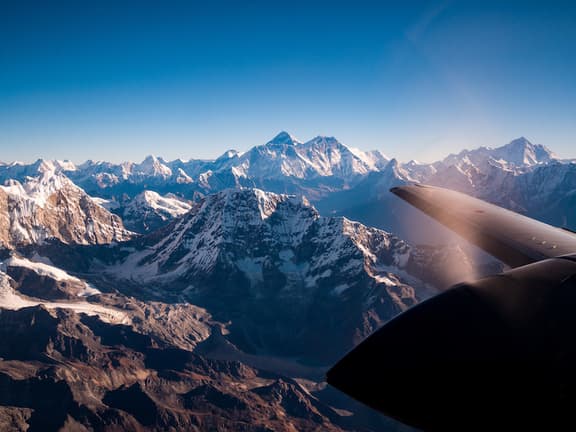
You leave the capital and climb east into the mountains. At around 3,100m the road reaches Dochula Pass, where 108 Druk Wangyal Chortens are arranged in tiers on a bend — built in memory of Bhutanese soldiers — and on a clear morning the eastern Himalaya lines the whole horizon behind them.
The descent into the Punakha valley is a change of climate as much as scenery: down to roughly 1,240m, into rice terraces, banana trees and a soft warmth the capital never has. You'll walk out across the fields to Chimi Lhakhang, the 15th-century temple of Drukpa Kunley — the 'Divine Madman' — still visited by couples hoping for a child, and reached through a village whose walls are painted accordingly.
Then Punakha Dzong itself, built in 1637 where the Pho Chhu (father) and Mo Chhu (mother) rivers converge, whitewashed and vast, with jacaranda flowering purple against its walls in spring. It remains the winter residence of the Je Khenpo, Bhutan's chief abbot, and served as the country's capital until the seat of government moved to Thimphu in the 1950s. Finish by crossing the Punakha suspension bridge — at around 160m, the longest of its kind in Bhutan — swaying high above the Pho Chhu.
Today you climb again, driving via Wangdue Phodrang — its dzong, first built in 1638 and lost to fire in 2012, has since been rebuilt and reconsecrated — and up over the Pele La Pass at 3,420m, the traditional dividing line between western and central Bhutan.
Beyond it opens Phobjikha, a wide glacial valley with no trees in its centre and a floor of open marshland, sitting at around 3,000m. Gangtey Goenpa, founded in 1613, looks down over the whole bowl from a low hill. There's an easy nature walk through the valley in the afternoon and, if the light behaves, a long slow sunset across the grass.
From late October to mid-February this is the wintering ground of the black-necked crane — several hundred birds fly in from Tibet, and the crane information centre keeps scopes trained on the marsh. Outside those months the valley is quiet and empty, which has its own appeal.
A long driving day back west, retracing the Pele La and Dochula passes with a stop at Tamchog Lhakhang — the temple of the 15th-century bridge-builder Thangtong Gyalpo, reached by an iron-chain footbridge of the kind he was famous for across the Himalayas. Expect most of the day on the road, with the scenery doing the work.
In Paro you'll visit the National Museum, housed in the round Ta Dzong watchtower above the valley, where the collection runs from festival masks and thangkas to armour and Bhutan's postage stamps. Below it stands Rinpung Dzong — 'fortress on a heap of jewels' — reached across a traditional covered bridge, and then Kyichu Lhakhang, believed to have been founded in the 7th century and among the oldest temples in the country. The evening is yours to stroll Paro's main street.
An early breakfast, then a twenty-minute drive to the base of Taktsang Monastery. This is the day the whole trip is built around.
Tiger's Nest is a steady uphill walk rather than a technical climb, but it earns its reputation: five to six hours round trip at a comfortable pace, through pine forest hung with prayer flags, past a cafeteria at the halfway point, then a staircase down and back up across a waterfall to the monastery buildings themselves. Ponies can be hired for the uphill section as far as the cafeteria. Standing at the top, looking back down 900m of cliff at the valley you drove through that morning, is the moment people come to Bhutan for.
On the way back you'll stop at Drugyel Dzong, built in 1649 to mark Bhutan's victory over Tibetan invaders, lost to fire in 1951 and rebuilt — its restoration reconsecrated in 2022. Then into Paro for a traditional hot-stone bath if you'd like one, and time among the handicraft and souvenir shops.
Please note: shoes, bags and cameras must be left outside before entering the monastery.
After breakfast and hotel check-out, you'll be transferred to Paro International Airport in good time for your onward flight. If your schedule allows a late departure, your guide can suggest a last stop in Paro town on the way.
Route & altitude
7 days
What’s Included
Departure dates
Frequently Asked Questions
Yes, and we arrange it for you. The USD 40 visa fee is included in this tour. We need a scan of your passport — valid for at least six months — and a passport-size photograph, which our operator submits before you travel.
It is Bhutan's tourism levy, USD 100 per person per night, and it is included in this tour's price. Bhutan puts the fee towards free healthcare and education, conservation and carbon offsetting — it is how the country keeps tourism low-volume by design.
Moderate — a steady uphill walk of five to six hours round trip, with no technical climbing. The path is well made and there is a cafeteria roughly halfway. Ponies can be hired for the uphill section as far as the cafeteria if you would rather not walk it. Reasonable general fitness is enough; no trekking experience is required.
Only if you want Phobjikha. The 7-day adds the Gangtey valley and the Pele La Pass, plus a long drive back to Paro. If black-necked cranes or the quietest valley in western Bhutan appeal to you, take it; otherwise the 6-day covers the same headline sights.
Late October to mid-February. Several hundred cranes fly in from Tibet to winter on the Phobjikha marsh, and the crane information centre keeps viewing scopes trained on them. Outside those months the valley is quiet and the birds are gone.
No. Flights to and from Paro are not included, and are quoted separately. Paro is served from Kathmandu, Delhi, Bangkok, Singapore and Dhaka among others, and we are happy to book your flights alongside the tour.
Yes. Paro is a short flight from Kathmandu, and many travellers combine the two. Tell us your dates and we will add the Kathmandu–Paro flights and any nights you would like in Nepal either side.
Traveler Stories
Traveler Reviews
To begin with, My vacation planning started from almost 3 months before our travel dates. Through TA I was lucky to find Rameshwar and his tour company Himalayan Social. Since I was particular on what and how I wanted to cover in my Vacation including Nepal an…
Read moreTastshea Dargey +975 17 60 38 05 Tastshea is a very friendly driver and with him on the wheel I confirm to you a very safe, pleasant and convenient ride all around Bhutan. He also is a very friendly and humble individual and encourages all sort of fun. I reco…
Read moreI loved Bhutan, Bhutan People, Its Culture And One Thing You Should Not Miss Is Tiger Nest Which is in Paro. You have to do hiking for that which takes time depending on your speed but it can take from One and Half Hour to Three Hour one side. And you will lov…
Read moreAmazing 12 day sightseeing tour of Nepal and Bhutan with some light trekking. Bhutan was very special and much less touristy than anywhere I have previously visited. Climbing to Tiger's Nest Monastery was a highlight. This was my second trip with Himalayan So…
Read more