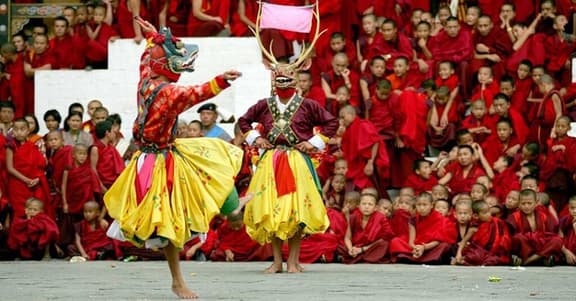

Photo: Shadow Ayush, CC BY-SA 4.0, via Wikimedia Commons. Crowds fill the streets and rooftops around a chariot during Indra Jatra near Kathmandu Durbar Square, 2018.
This is a what-to-expect story, not a trip report. It imagines a sightseeing day in Kathmandu that happens to coincide with a jatra, using HSJ's current tour plan and general festival etiquette. It doesn't describe a real festival day, a particular guest or anyone's words. For festival dates and visitor rules, see our Kathmandu Valley jatra calendar.
You booked a sightseeing day for the temples and squares. Then you find out a jatra is on. Your quiet tour of carved windows may be about to share the streets with drums, a chariot and thousands of people. Here's how a day like that can unfold, and how to make the most of it.
The morning: a plan with some give
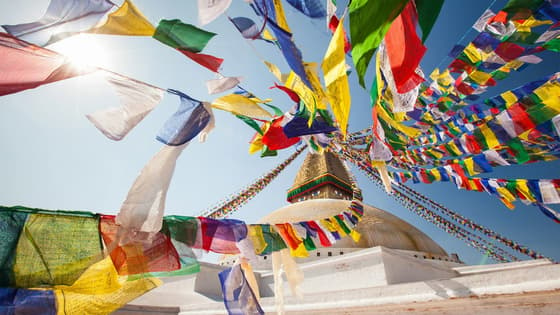
On HSJ's Private Kathmandu Full Day Sightseeing Tour, you choose your pickup time, anywhere from 8:00 to 10:30 am. The plan covers four stops: Kathmandu Durbar Square, Swayambhunath, Boudhanath and Pashupatinath. You travel in a private car, van or Hiace with your own English-speaking guide.
On a festival day, the plan stays the same but the order and timing may not. If you know your date overlaps with a jatra, tell HSJ when you book. If you only find out on the day, mention it in the car. Your guide's first job is to work out where the procession is and where the roads are closed, and to adjust the route if needed.
Bring what you'd bring anyway: comfortable shoes, sunglasses, a hat, your passport or ID, and Nepalese rupees in cash. Entrance fees aren't included in the tour price, and neither is lunch. On a busy day, carry a little more patience too.
The drive in: slower than usual
On a normal day, the drive to Kathmandu Durbar Square takes about 10 to 30 minutes from your hotel. On a festival day, roads near the old city may be closed or jammed, so the car may drop you farther out than usual. That means more walking, through lanes you might not otherwise see.
You may hear the festival before you see it: drums, cymbals, a crowd moving somewhere ahead of you. Stay close to your guide here. In narrow streets it's easy to lose each other.
At the square: watching, not crossing
Normally you'd spend about 1.5 to 2 hours at Kathmandu Durbar Square, walking through courtyards and looking at the carved windows, doors, pillars and balconies of the old palace. On a festival day, some of that walking may give way to standing still.
When a procession is moving, your guide will probably look for somewhere to stand rather than a way through. A temple step, a raised platform or the edge of a building gets you above the crowd and out of its path. From there, you can watch the procession go past instead of being carried along with it.
Keep a few things in mind while you watch:
Stay well clear of a chariot's wheels and the ropes used to pull it.
Don't touch the chariot, images, masks or offerings unless someone invites you to.
Ask before you photograph people, especially during rituals.
Follow instructions from police, volunteers and organisers, even if you don't understand why.
Most of all, remember that this isn't a show put on for visitors. It's a religious event run by families and communities, and you're watching as a guest.
Changing the order
Sometimes the best plan is to come back later. If the square is too crowded to move through, your guide may suggest heading to another stop first and returning when the procession has moved on, or seeing more of the square from the edges. You might end up seeing less architecture than you planned, but in return you'll see the square doing what it was built for.
The other stops on the tour are in different parts of the city. A road closure near the old centre may not affect them at all, or traffic may be heavier all over. Your guide will judge this on the day.
When to step away
Crowds at a big jatra can be very dense. If you're uncomfortable, travelling with children, or have trouble with crowds, say so. Your guide can find a quieter vantage point, or you can skip the busiest part. You don't need to be in the middle of it to understand what's going on.
If you have something fixed later in the day, like a flight, allow extra time. Diversions around the festival route can slow traffic across the city.
The end of the day
The tour ends with drop-off at your hotel. Your day may not have matched the itinerary exactly, but if your guide adapted to the festival, that was the point. Jatra dates move every year, so if you want to plan around one rather than come across it by chance, check our jatra calendar and the broader explainer What Is a Jatra?
Plan your day
Book the Private Kathmandu Full Day Sightseeing Tour and tell HSJ if your dates overlap with a festival.
Reviewed by Amrit Sapkota, Himalayan Social Journey