
This is a what-to-expect story, not a trip report. It walks through the morning before a first tandem flight on HSJ's Kathmandu paragliding trip, using only the steps in HSJ's current tour plan. It doesn't describe a particular guest, pilot or flight, and it stops before take-off. For prices, launch sites and cancellation terms, see our guide Paragliding in Kathmandu: Launch Site, Weather, Transfers and Price Conditions.
Most first-timers expect the hard part to be the flight. More often, it's the waiting before it: the drive out of the city, the briefing, the moment someone hands you a helmet. This is what that hour or so is like, step by step.
An early pickup
Your morning starts at your hotel between 7 and 8 am. The pickup is included, and so is the transport: a taxi or private car if there are four of you or fewer, a jeep or Scorpio for a bigger group. You don't need to bring any flying equipment. A small bag with water, a layer for the hillside and your phone is enough. Meals aren't included, so eat something before you leave or bring a snack.
Where you're going depends on the day. HSJ flies from Chandragiri Hill, Kakani or Shankarapur, depending on conditions, and confirms the site when you book. The current tour plan heads for Shankarapur, about an hour to an hour and a half from the city depending on traffic. If you're flying on the Chandragiri trip instead, the last part of the trip up is a cable car to the hilltop.
The drive is a good time to ask your HSJ contact anything you didn't ask when you booked. If something about your health or fitness could matter, tell them now, before the briefing, not after.
Arriving at the launch site
You should reach the site between 8:30 and 9 am. If you've only seen paragliding in videos, the launch area may look simpler than you expected: a hillside, some gear and a view out over the valley.
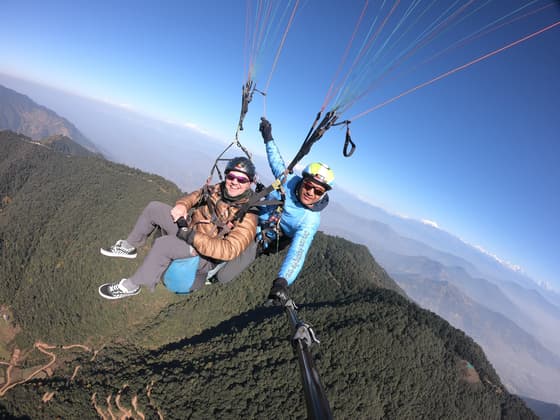
This is where you meet your pilot. You fly tandem: you're attached to a certified pilot who controls the glider from take-off to landing. You don't steer, and you don't need any experience. Your job is to listen and follow instructions.
The briefing
Before anyone gets into a harness, there's a safety briefing. HSJ's tour plan doesn't give a script, and every pilot explains things in their own way, so treat the briefing itself as your guide, not anything you've read online. The point is simple: you need to know what the pilot will ask you to do at take-off and landing, and what to do once you're in the air.
A few things help:
Ask anything you're unsure about. A question asked on the ground costs nothing.
Repeat the instructions back if it helps you remember them.
Be honest if you feel unwell or very nervous. The pilot would rather know.
Many first-timers feel nervous at this stage. That's normal, and you don't have to hide it.
Gearing up
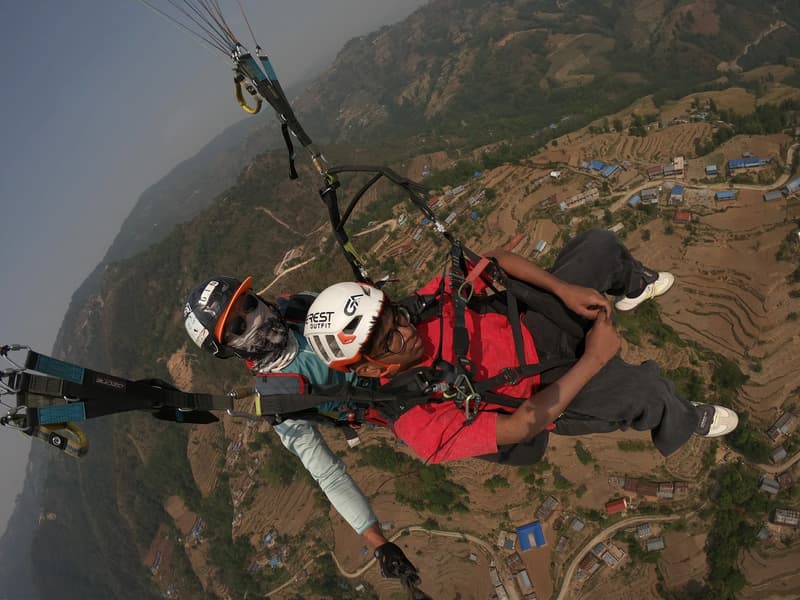
Between about 9 and 9:30 am, you gear up. You're given a helmet and fitted into a harness, along with any other equipment the pilot uses. A harness fitting can feel slow and fussy, with straps adjusted and checked, and that's how it should be. Let the pilot do it their way, and say so if anything feels too tight or too loose.
This is also the moment to sort out your pockets. Anything loose can fall. Ask the pilot what you can bring into the air and where it should go. HSJ's trip includes photos and video of your flight, so you don't need to hold a camera.
Waiting for the air
The flight window in HSJ's plan is 9:30 to 10 am. Within that window, the pilot picks the moment. Paragliding depends on the wind and cloud, and nobody can promise exactly when they'll be right, or that they will be right that morning at all.
So you might stand around in your harness for a few minutes while the pilot watches the conditions. You might wait longer. And on some mornings, the pilot may decide not to fly. That's a possibility you should go in expecting, not a failure. HSJ's guide explains what happens to your booking if the weather stops the flight, so read it before your day, and keep the rest of your morning free.
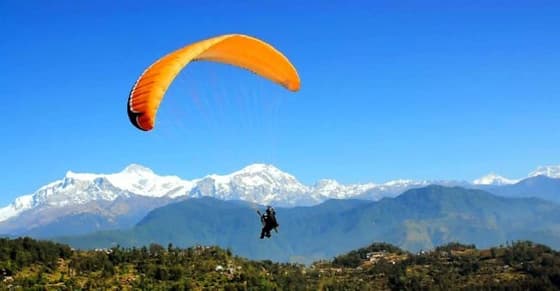
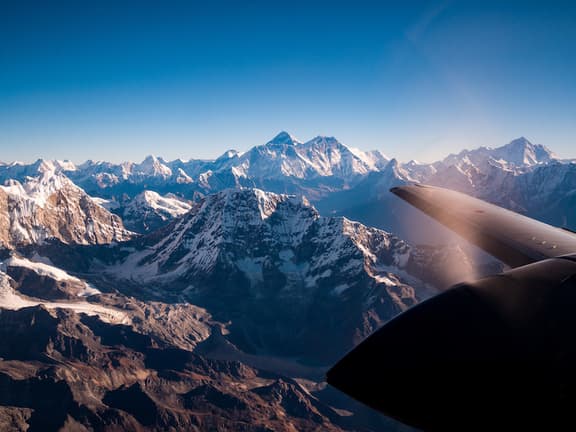
While you wait, look out. On clear days, HSJ says you can see the peaks of Langtang, Ganesh Himal and Himalchuli on the northern horizon. On hazy days you'll see the valley and its green hills instead.
When the pilot says it's time
This story stops here, with your pilot's instructions in your head and the valley in front of you. If you take off, the tour plan says you can expect 20 to 30 minutes in the air, depending on the weather, before the drive back to your hotel.
What happens in those minutes is your own story. If you'd like to share it with us afterwards, in your own words, we'd be glad to hear it.
Plan your morning
Book on the Paragliding in Kathmandu trip page, and read the Kathmandu paragliding guide for launch sites, prices, inclusions and cancellation terms.
Reviewed by Amrit Sapkota, Himalayan Social Journey