


“Tihar hindu.JPG” by Krish Dulal, via Wikimedia Commons, licensed under CC BY-SA 3.0. Unmodified.
TL;DR — Bhai Tika key facts
2026 date: Wednesday, 11 November, corresponding to Kartik 25, 2083 BS.
Auspicious time: 11:07 AM Nepal time (NPT, UTC+5:45).
Meaning: Blessings, longevity and affection between siblings.
Recognisable traditions: Saptarangi tika, mustard oil, dubo grass and makhamali garlands.
For visitors: Family ceremonies require an invitation; public access does not mean unrestricted photography.
A colourful line of tika on the forehead is the most visible sign of Bhai Tika. Its deeper meaning sits in quieter gestures: preparing a brother's favourite food, carefully threading flowers, returning a blessing and making time to be together.
What is Bhai Tika in Nepal?
Bhai Tika is the sibling-blessing celebration on Tihar's traditional fifth day, concluding Nepal's festival of lights. Traditionally, sisters honour their brothers with tika, garlands and prayers for wellbeing and longevity; brothers return affection through blessings and gifts. Families adapt the observance in different ways, including celebrations between sisters and chosen siblings.
When is Bhai Tika 2026, and what is the saait?
Bhai Tika 2026 falls on Wednesday, 11 November, with the auspicious saait at 11:07 AM Nepal time. Onlinekhabar attributes the announcement to Nepal Panchanga Nirnayak Samiti member Laxman Panthi. The Rising Nepal independently confirms both the date and time, citing the national calendar committee's festival schedule.
Onlinekhabar's announcement also reports the committee's recommended orientation: brothers face west and sisters face east. These directions are specific to the announcement, not a rule to extrapolate to every year or location.
Bhai Tika 2026 fact | Verified detail |
|---|---|
Gregorian date | Wednesday, 11 November 2026 |
Nepali date | Kartik 25, 2083 BS |
Saait in Nepal | 11:07 AM NPT, UTC+5:45 |
Newar observance | Kija Puja |
Saait means an auspicious moment, not a tourist visiting slot. Respect the timing chosen by your host. People celebrating outside Nepal should consult their own local panchang rather than assuming that a time-zone conversion supplies the correct religious timing.
What is the Yama and Yamuna legend behind Bhai Tika?
A widely told legend links Bhai Tika with Yama, the god of death, and his sister Yamuna. She welcomes him, offers tika and surrounds him with protective ritual symbols. Her devotion and requests for lasting wellbeing explain the association between sibling affection, enduring flowers and protection from death.
The Rising Nepal's account describes Yamuna applying seven-coloured tika and circling her brother with mustard oil, flowers and dubo. She asks him not to leave until these have dried or faded. Other tellings describe a sister bargaining with Yama for a mortal brother's life.
How does the Bhai Tika ritual unfold step by step?
A common sequence includes preparing the worship space, a symbolic walnut-breaking ritual, an oil circle, tika, garlands, food and reciprocal gifts. The order and details differ by household and community. Treat the outline below as an explanation for visitors, not a substitute for family elders or a priest's guidance.
How do families prepare for the ceremony?
Families clean and arrange the ceremonial space, gather offerings and prepare places for the siblings to sit. Some sisters fast or delay eating until the tika is complete, while other households follow different practices. The preparations are part of the devotion, not merely decoration before the main event.
Why is a walnut broken during Bhai Tika?
In some households, a sister cracks a walnut, often near the doorway, as a symbolic act against harm or obstacles threatening her brother. Accounts describe a hard-shelled walnut and a grinding stone used for the task. It is a meaningful inherited custom, not a test every family must perform identically.
What does the mustard-oil circle represent?
A sister draws a trail or circle of mustard oil around her seated brother, sometimes with water incorporated according to family practice. The circle expresses protection and connects with stories in which death must wait for the oil to dry. Details such as repetitions and accompanying prayers are not universal.
What is saptarangi tika, and how is it applied?
Saptarangi tika means seven-coloured tika: a distinctive multicoloured mark applied to the forehead during Bhai Tika. Families often create a vertical design using a pale base and coloured dots or marks. Five-colour and other community-specific forms also exist, so seven colours should not be presented as compulsory everywhere.
Why are dubo and makhamali garlands important?
Dubo grass and makhamali flowers express wishes for endurance and long life. Makhamali is globe amaranth, whose flower heads retain their colour well; dubo is associated with resilience. Their garlands connect the visible ceremony with the legends' promise that affection and protection will outlast the moment of worship.
What food follows the tika and garlands?
Sisters offer food such as sel roti, sweets, fruit and packets of nuts or dried fruit after the blessings. Sel roti is a ring-shaped, fried rice-flour bread associated with festive hospitality. The exact plate varies, and some households include curd or other auspicious offerings known as sagun.
What do brothers give their sisters in return?
Brothers traditionally give their sisters presents or money, often called dakshina, and may return tika and blessings. The exchange acknowledges affection and gratitude rather than setting a price for the ceremony. Sisters may give gifts too; what matters is the relationship, not the size or cost of an offering.
How is Newar Kija Puja different?
Kija Puja is the Newar sibling observance associated with Bhai Tika. Newar households may prepare individual mandalas, lamps and auspicious food offerings, bringing their own ritual language and family traditions to the celebration. It is related to, but distinct from, Mha Puja, which honours the self during Tihar.
The Kathmandu Post's reporting explains that Newar mandalas can use grains, pulses, powders and oil-soaked wicks, with meanings that differ between Hindu and Buddhist traditions. A visitor should not assume every colourful floor design is simply decorative rangoli.
Leave mandalas undisturbed. Ask your host where to sit, where to place your feet and whether photographs are welcome. Our guide to Nepal's jatras offers further context on the valley's living festival traditions; Bhai Tika itself is primarily a household observance, not a chariot procession.
How do customs vary across communities and families?
Bhai Tika is not celebrated in one identical form across Nepal. Tika designs, ritual foods, mandalas, family roles and interpretations can differ, including between Newar, hill and Mithila traditions. Some families also celebrate sisterhood or chosen sibling relationships, keeping the emphasis on care rather than a single prescribed household structure.
This variety is part of the festival's richness, not a reason to rank one version above another. Nepali Times has documented sisters exchanging tika in families without brothers. Such choices show that tradition can retain emotional meaning while the people practising it reshape its expression.
What if someone does not have a brother or sister?
People without siblings may celebrate with relatives or people they regard as siblings. In Kathmandu, Balgopaleshwar Temple in Rani Pokhari is an important public destination for receiving tika. Current-year reporting confirms preparations for its customary Bhai Tika opening, particularly for devotees without brothers or sisters.
Setopati's 6 November 2026 report describes painting, cleaning and visitor arrangements for the annual opening. This supports planning a respectful visit on 11 November, but it does not establish exact 2026 gate-opening hours or unrestricted access to every part of the shrine.
Ask locally about queues, entry restrictions and photography before setting out. Public opening is an opportunity for worship, not a guarantee that every international visitor can enter the inner temple or receive a ceremony on demand.
How does Bhai Tika relate to Bhai Dooj in India?
Bhai Tika and India's Bhai Dooj are related sibling festivals associated with Yama and his sister, blessings, tilak and gift exchange. Nepal's observance is especially recognisable for multicoloured tika and garlands. India has its own regional names and practices, so neither country should be reduced to one uniform ceremony.
How can international travellers experience Bhai Tika respectfully?
Accept a household invitation only when it is genuinely offered, and ask your host how to participate. Dress modestly, request permission before photographing people and leave offerings untouched. If you visit Rani Pokhari, prioritise devotees' access and follow staff instructions rather than assuming the celebration is arranged for spectators.
Practical Kathmandu advice from HSJ:
Confirm your guide, vehicle and meal arrangements before the holiday.
Keep your schedule loose rather than combining a family invitation with rushed transfers.
Ask about footwear before entering a home or ceremonial area.
Never photograph children without their guardian's permission.
Offer help quietly; do not demand demonstrations or staged rituals.
Learn a simple greeting with our Namaste guide.
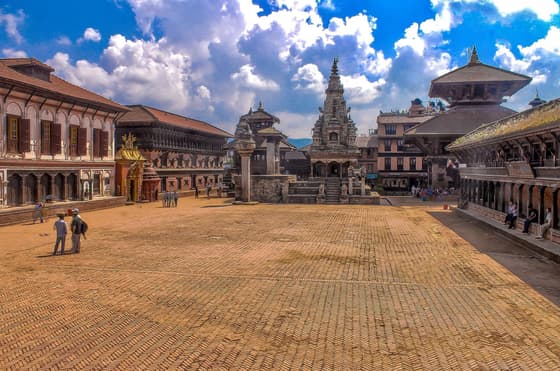
For heritage context on another day, consider the Kathmandu 7 UNESCO Heritage Sites Day Tour Private/ Group option or Bhaktapur Durbar Square Tour. Neither should be mistaken for guaranteed admission to private Bhai Tika ceremonies.
What else do travellers ask about Bhai Tika?
Most practical questions concern timing, invitations, photographs and the difference between a family ritual and a public event. These answers offer a starting point for planning a considerate visit. Your host or temple staff remain the authority on what is appropriate in the particular setting you enter.
Is Bhai Tika the same as the whole Tihar festival?
No. Bhai Tika is the sibling-blessing observance at the end of Tihar, while Tihar also includes days honouring animals, Laxmi and other traditions. People sometimes use the names loosely in conversation, but travellers should check which specific observance an invitation or festival listing refers to before making plans.
Can foreigners receive Bhai Tika?
A visitor may receive tika when a host or an appropriate public organiser genuinely invites them. Nationality alone does not create an invitation, and access rules differ between homes and temples. Ask respectfully, explain any skin sensitivity and accept that observing quietly may be more appropriate than participating.
Do visitors need to fast before joining a ceremony?
Do not assume you must fast. Some sisters and other participants delay food until the ritual is complete, but household practices vary and visitors should ask their host. No travel experience requires you to ignore your health or dietary needs; explain any concerns politely before the ceremony begins.
Is Rani Pokhari open every day for Bhai Tika visitors?
No. The Balgopaleshwar Temple's customary public opening is specifically associated with Bhai Tika, and 2026 reporting describes preparations for that occasion. Do not assume normal daily temple access or repeat an old opening-hour claim. Confirm the day's arrangements locally and distinguish the temple from the surrounding public area.
May I photograph the seven-coloured tika ritual?
Only with permission from the people involved and the household or temple responsible for the ceremony. Ask before taking close-ups, avoid flash and do not interrupt prayers or request repeated actions. Permission to watch is not permission to publish a person's image, especially when children are present.
Will a Kathmandu sightseeing tour include a family ceremony?
Not automatically. Heritage tours explain temples, squares and local culture; household Bhai Tika rituals are private unless a separate invitation has been arranged. Ask exactly what an itinerary includes, and avoid any promise of guaranteed intimate access simply because your visit falls during Nepal's festival season.
How can HSJ help you plan a thoughtful festival visit?
Himalayan Social Journey is based in Kathmandu and can help you combine heritage sightseeing with a considerate festival itinerary. Tell us your dates, interests and preferred pace. We can discuss suitable tour options without treating family worship as a performance, leaving room for the warmth that makes Bhai Tika meaningful.